
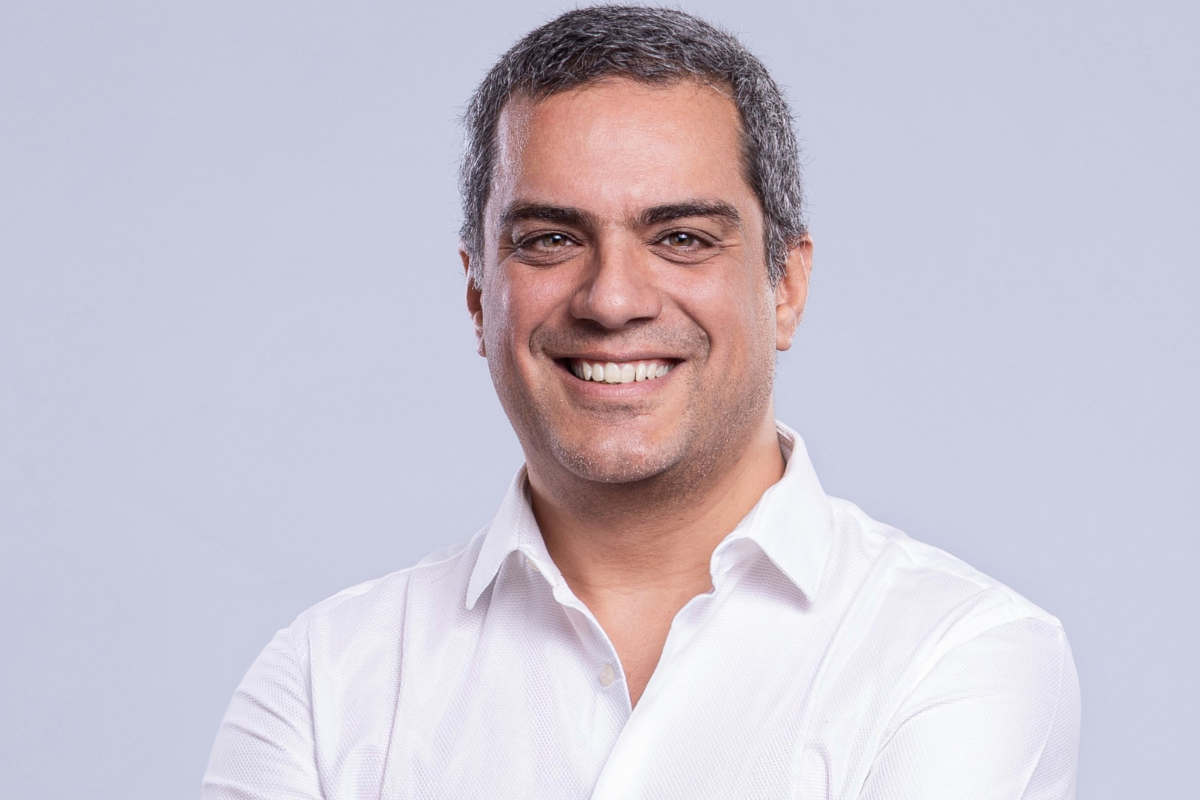
Egypt’s wealth is enormous and almost entirely misplaced: of a market worth roughly USD 1.7 trillion, an estimated 84% sits in real estate and gold, only 15% in bank deposits, and a mere 1% in actual investments. It’s a gap that co-founders Mazen El Kerdany and Ahmed Ashour set out to close when they launched PALM in 2024.
El Kerdany spent two decades in asset management across Cairo and Dubai, managing USD 2 billion in mandates for institutions and HNWIs before deciding that the discipline built for the wealthy belonged to everyone else too. Ashour brought the product and tech muscle, honed at Amazon, Johnson & Johnson, and Goldman Sachs, before returning home to Egypt in 2022.
Together they built a goal-based saving and investment platform, licensed by Egypt’s FRA, that ties every pound saved to a real-life purpose, whether that’s a wedding, a car, or simply the discipline of not watching inflation quietly erode a bank balance. We sat down with Mazen to talk about serving Egypt’s 28 million banked-but-underserved savers, the mechanics of turning spending into investing, and why he thinks Egypt today looks a lot like the US in the 1980s.
1. Tell us about yourself / your co-founder(s).
I’m Mazen, co-founder and CEO of PALM. I’ve worked in asset management since 2004, at regional houses including EFG Hermes and Beltone, living and working in Cairo and Dubai, where I managed USD 2 billion in mandates for institutions and high-net-worth individuals. Later in my career I moved to the corporate strategy side, leading the transformation of a classic investment bank into a fully-fledged financial services company, and refocusing a public investment company around a sharper mandate aligned with its mission. The idea behind PALM followed me through that whole career: everything we built for institutions and HNWIs (professional management, discipline, strategies matched to objectives) was exactly what ordinary people needed most, and had no access to.
I joined hands with Ahmed Ashour, co-founder and CBO, who brings product, tech, and finance experience from Amazon, Johnson & Johnson, and Goldman Sachs. Ahmed has lived in Cairo, Luxembourg, New York, and Seattle. He worked across both financial services and consumer products building new business lines like Amazon marketplace for more than 8 years and corporate development, supported deals throughout his tenure in Goldman Sachs IB division focusing on biotechnology and TMT sectors before returning to Egypt in 2022.
Together, we have gathered a founding team from the different walks of life that matter for PALM: asset management, banking, FMCG, and fintech.
2. Who are your target customers, and what problem / opportunity do you address for them?
Our customer is the banked Egyptian aged 25 to 50: a saver, not a thrill-seeker. There are roughly 28 million of them in Egypt alone, and they sit in a gap that neither banks nor fintech startups serve well. Banks have the trust and the deposits (around 57 million users) but offer low real returns. Fintech startups have slick products (around 2 million users) but lead with features, not outcomes.
Like all Emerging Markets, The saver has three bad options today. Leave money in the bank and watch inflation erode it. Try to invest themselves and get stuck: no time, no expertise, and no clarity. Alternatively, do nothing and quietly get poorer. We address that by matching money to its purpose, whether yield, a goal, wealth, or a planned purchase, and making it work the whole time.
This is where PALM comes, a solution that gives Main Street a simple way to grow their wealth, hassle free. A product that has the experience profile of a bank and the return profile of an investment platform built around their life needs and goals.
3. What is your product / solution? Who do you compete with, and what is your USP?
PALM is a goal-based saving and investment platform, licensed by the FRA for portfolio management. We offer four products, each built around a real need rather than a financial instrument:
Save is for money you want working on a short-term basis: yield higher than a bank would give you, without locking it away. Plan is for reaching a specific goal at a specific time, a wedding, and a car, school fees, with the investment strategy matched to your timeline and risk profile. Invest is for long-term wealth creation, again matched to your risk profile. In addition, our real differentiator is our Shop product, which links saving and investing to their eventual use: you save toward a purchase, your money earns a return along the way, and you unlock a negotiated discount through our merchant network at checkout. That link between intent and action is what makes the behavior stick, and it combines the benefit of investing with spending smarter.
We compete on two fronts: banks’ savings products (trusted, but low real returns) and digital investment apps (engaging, but built for traders, not savers). Our USP is that we’re use-case-led rather than feature-led. A bank sells you a deposit; a trading app sells you instruments. We start from the question the customer is actually asking, “I want my money to do [something] for me”, and match the product to the need. Behind that sits a fully regulated, vertically integrated stack: license, portfolio management, product, and distribution in one loop, reinforcing each other rather than sitting in silos.
4. How do you help scale financial services, and how can financial institutions partner with you?
Start with the most fundamental way: we turn savers into investors. Most of our customers are investing for the first time in their lives, and that happens through Save, Invest, and Plan: money that used to sit in cash, gold, or a low-yield deposit moves into professionally managed, regulated instruments, matched to a purpose and a risk profile. Every PALM user is, in effect, a new participant in Egypt’s capital markets. That is not shifting market share between institutions; it is growing the pool of investors the whole financial system draws from and the pool of funds that drive real, sustainable economic growth to the whole country.
Then there’s distribution, and that is Shop. By linking saving and investing to planned purchases, Shop turns consumption intent into an investment trigger. Someone saving toward a purchase becomes an investor along the way, often without ever having thought of themselves as one. Merchants gain committed, pre-funded buyers; the financial system gains first-time investors through a channel it never had, the economy gains financially healthier households who are less reliant on government support and spending, which decreases the government deficit and its reliance on external funding sources to finance this deficit.
Third, corporate and employer channels: employee saving plans, end-of-service provisioning, and SME liquidity and treasury through a B2B layer. This lets a company, or a financial institution-serving one, extend investing to a whole workforce at once, most of whom have never held an investment product. An insurer or bank with corporate clients can bring PALM in as the savings and end-of-service layer for those clients’ employees, deepening its own relationship while we handle the regulated investment side.
Later, white labeling. Our stack of license, portfolio management, goal engine, and Shop rails is built to eventually run under a partner’s brand as Wealth-as-a-Service opening the door for more emerging managers/ banks to offer holistic services to their clients and lower their cost of doing business. That’s not where we are today, but institutions that want to be early conversations for that phase are welcomed ones.
5. What relevant industry trends or market shifts should we be watching? Any research or resources you can point us to?
Egypt’s wealth market is around USD 1.7 trillion, but it’s badly allocated for the saver: roughly 84% of that in real estate and gold, 15% in banks, and only 1% in investments. The interesting part is the direction of travel: bank deposits are growing but decelerating, while investing in capital market instruments and products is growing off a small base and accelerating (to say the least). Real incomes are finally recovering as inflation drops, the startup ecosystem is waking up to the savings space, and the capital market regulator (FRA) is accommodating for this wave with a set of easing regulations. We think Egypt is at an inflection point similar to the US in the 1980s.
For resources: the Central Bank of Egypt Statistical Bulletin, EGX reports, FRA monthly and quarterly reports and the World Gold Council. We’ve also written a primer on the Egyptian mutual fund industry that we’re happy to share.
6. What is your current stage and traction, and how can our network help?
We’re currently preparing for our seed round, planned for early 2027.
We’ve been deliberately growing our customer base gradually ahead of our digital onboarding license, which is scheduled for this month. Once it lands, the handbrake comes off acquisition. What matters at this stage is what the cohorts are telling us, and eleven months in, the data is striking: net revenue retention of 310%, against a typical SaaS benchmark of 120–140%, and churn of as little as 3% for the entire period since launch. People who start saving with PALM stay, and they put in more over time.
The network can help with two things in particular. First, warm introductions to VCs interested in the growing savings space in MENA, Emerging Markets, and Egypt specifically. Second, access to a segment we think Europe underserves,the North African diaspora. They have savings, ties home, and few products built for how they actually think about money across two countries. We want to build something that speaks to them, and introductions to partners, channels, or investors focused on that population would be valuable.
7. What’s on your bookshelf or podcast app? Your favourite place for a coffee or a drink?
My bookshelf is a lot of history, a lot of cookbooks, and a persistent nag for behavioral finance. Lately I’ve been enjoying Alchemy by Rory Sutherland. On podcasts it varies, but recently I’ve been listening to HerMoney with Jean Chatzky, which is full of insights on how women approach financial decisions, something we think about a lot for our own customer base.
My favourite spot: I love having my tea with mint by the Nile at the Egyptian Rowing Club in Giza.
From a two-billion-dollar asset management career to building the rails that could turn millions of Egyptian savers into first-time investors, Mazen El Kerdany’s story is a reminder that the biggest fintech opportunities often sit in the gap between what banks offer and what people actually need.
With a seed round on the horizon and a digital onboarding license about to remove the last handbrake on growth, PALM’s next chapter looks set to test just how far that thesis can scale, not only across Egypt, but across the wider North African diaspora it has its sights on next. We’ll be watching closely.