
Artificial intelligence is no longer just answering questions; it’s re-architecting how global capital is managed. Leading this shift is aisot technologies, an ETH Zurich spin-off transforming institutional investment management through predictive AI and agentic intelligence.
Founded by Stefan Klauser (CEO), Nino Antulov-Fantulin, and Tian Guo, and joined by CTO Roger Peyer, aisot bridges cutting-edge academic research with high-stakes financial engineering. Rather than replacing human judgment, their platform provides asset managers, private banks, and wealth institutions with a sophisticated predictive layer—turning massive datasets into real-time portfolio optimization without creating a black box.
We sat down with Stefan Klauser to discuss how aisot collaborated with ZKB to launch AI-supported Swiss equity products, why agentic AI is redefining governance in finance, and how their recent CHF 2 million funding round is accelerating their vision to make institutional investment processes truly intelligent.
1. Tell us about yourself / your co-founder(s).
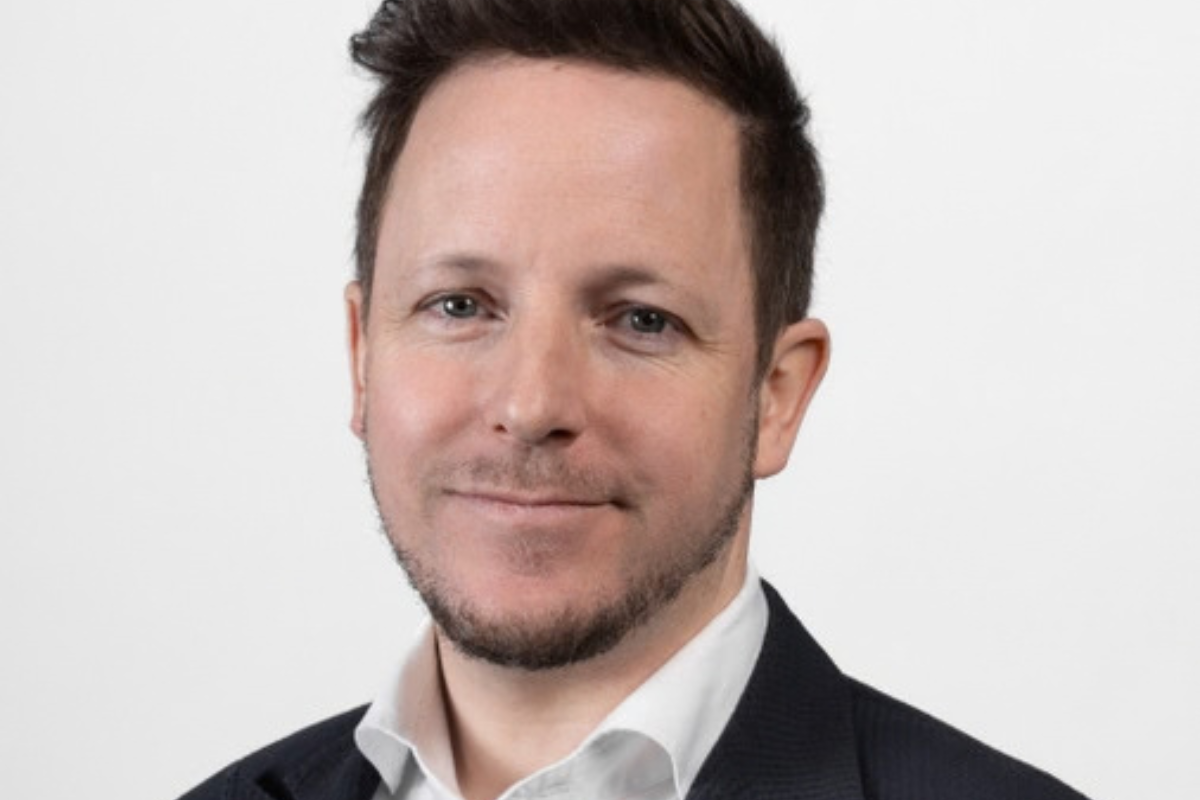
I’m Stefan Klauser, CEO and Co-Founder of aisot technologies, an ETH Zurich spin-off focused on bringing predictive AI into institutional investment management.
I founded the company together with Nino Antulov-Fantulin and Tian Guo. Our roots are in complex systems, machine learning and quantitative finance, and the idea behind aisot grew out of research at ETH Zurich. Roger Peyer, our CTO, later joined the team, bringing experience from building wealth management solutions in the financial industry. Today, we combine that scientific background with a team spanning investment management, technology and financial services.
My own role has increasingly shifted towards translating what our technology can do into real applications for asset managers, banks and wealth managers and, importantly, making sure that AI becomes something investment professionals can actually use and trust rather than another black box.
2. Who are your target customers, and what problem / opportunity do you address for them?
Our main customers are asset managers, wealth managers, private banks and other professional investment teams.
These institutions already have tremendous amounts of data, research and investment expertise. The challenge is that markets are becoming more complex, information moves faster, and investment teams are expected to process more signals while at the same time providing greater consistency, transparency and personalization.
We see the opportunity as giving these teams a predictive intelligence layer. Rather than replacing an investment process, aisot helps them systematically evaluate what could happen next, understand the associated risks, optimize portfolios and continuously monitor them.
The important point is that the investment professional stays in control. AI provides another set of eyes, but one that can continuously process far more information than a human team could manually.
3. What is your product / solution? Who do you compete with, and what is your USP?
aisot provides an AI platform for investment professionals, covering the investment process from information and prediction through risk analysis and portfolio construction to ongoing monitoring.
Underneath the platform are different specialized models: predictive models for asset returns, news and sentiment models, risk models and portfolio optimization. On top of these, we have built an AI agent through which investment professionals can interact with these capabilities much more naturally.
We therefore compete less with one particular company than with a combination of quantitative research tools, portfolio optimization systems, market-data platforms and, increasingly, general-purpose AI tools.
Our main differentiation is that we connect predictive AI directly to the investment process. We are not simply putting a language model on top of financial data. The agent can interact with quantitative models and portfolio infrastructure underneath it.
The second differentiator is institutional control and explainability. Financial institutions need to know where information comes from, understand why a portfolio changes and define exactly what an AI system is allowed to do. We have designed aisot around that requirement.
4. How do you help scale financial services, and how can financial institutions partner with you?
There are several ways.
The simplest is increasing the scalability of an existing investment team. An investment professional can use aisot to monitor hundreds of securities or portfolios, test investment ideas and optimize portfolios without having to build quantitative and AI infrastructure internally.
A second area is product creation. Institutions can use the technology to build AI-supported investment products relatively quickly while keeping their existing custody, execution and regulatory setup.
A good example is our collaboration with ZKB. Together, an AI-supported Swiss equity basket was turned into an investable tracker certificate, with aisot providing the technology and intelligence behind the portfolio process.
More recently, we have also applied the technology to a very simple Bitcoin-and-cash universe. The AI dynamically adjusts exposure rather than trying to generate additional yield through leverage, lending or DeFi counterparty exposure. It demonstrates that the same technology can be used from traditional multi-asset portfolios all the way to digital assets.
And there is a third opportunity we find particularly interesting: using the agent to scale investment advisory. Instead of an adviser manually translating every client constraint into a portfolio analysis, AI can help perform that work systematically while staying within the institution’s investment framework.
5. What relevant industry trends or market shifts should we be watching? Any research or resources you can point us to?
I would watch three developments.
First, financial institutions are moving from AI experimentation to integration. The interesting question is no longer whether a bank has access to a large language model. Almost everybody does. Competitive differentiation will increasingly come from connecting AI to proprietary data, models, processes and decision-making infrastructure.
Second is the move from generative AI towards agentic AI. Once an AI system can not only answer a question but access tools, analyse a portfolio and initiate workflows, questions around authorization, traceability, governance and human oversight become much more important. The World Economic Forum’s AI Playbook for Financial Services, published in June 2026, makes exactly this point: institutions are moving towards scaled AI deployment, with trust, governance and data foundations becoming central.
Third, I think we will see increasing convergence between AI, traditional finance and digital assets. Tokenization is moving beyond experimentation into established financial infrastructure. BlackRock, for example, recently introduced tokenized access to institutional money-market funds in Europe, while the World Economic Forum has highlighted tokenization’s potential across issuance, securities financing and asset management.
For people interested specifically in agents, I would also recommend the World Economic Forum’s 2026 report AI Agents in Action. It focuses on a question we think will become crucial in financial services: not simply what an agent is capable of doing, but what it is authorized to do, under which constraints, and how that can be monitored.
6. What is your current stage and traction, and how can our network help?
We are now firmly in the commercialization and scaling phase.
We have live investment products, including traditional equities and digital assets, institutional clients and pilots across asset and wealth management, and we are currently expanding a number of relationships with banks and asset managers. We recently closed a CHF 2 million financing round and are preparing the company for its next stage of growth.
One development we are particularly excited about is that a private bank is preparing to introduce an aisot-powered multi-asset portfolio to its clients. That is very much where we see the company going: from individual pilots towards aisot becoming part of the investment infrastructure of financial institutions.
The network can therefore help us most through introductions to CIOs, heads of investment management, portfolio management and innovation teams at banks, asset managers and wealth managers who are genuinely thinking about how AI should become part of their investment process.
We are especially interested in institutions that already have a strong investment philosophy. We don’t want to replace it; we want to make it more scalable and systematic.
7. What’s on your bookshelf or podcast app? Your favourite place for a coffee or a drink?
I was recently given The Man Who Solved the Market by Gregory Zuckerman, about Jim Simons and Renaissance Technologies, so that is currently on my bookshelf. It is particularly relevant to us because it shows both the extraordinary potential of systematic investment approaches and how much the field has evolved since those early quantitative pioneers.
For a coffee or a drink, I’m probably giving a very Swiss answer: somewhere close to Lake Zurich, ideally outside when the weather allows it.
From an ETH Zurich research project to live investment products and a growing roster of institutional clients, aisot’s journey shows what happens when scientific rigour meets real-world investment needs. Stefan’s message is clear: AI is at its best when it strengthens an institution’s investment philosophy rather than replacing it.
If you are a CIO, or work in investment management, portfolio management or innovation at a bank, asset manager or wealth manager exploring how AI fits your investment process, this is a conversation worth continuing. Reach out to Stefan and the aisot team, and keep an eye on this space for more voices shaping the future of financial services.