
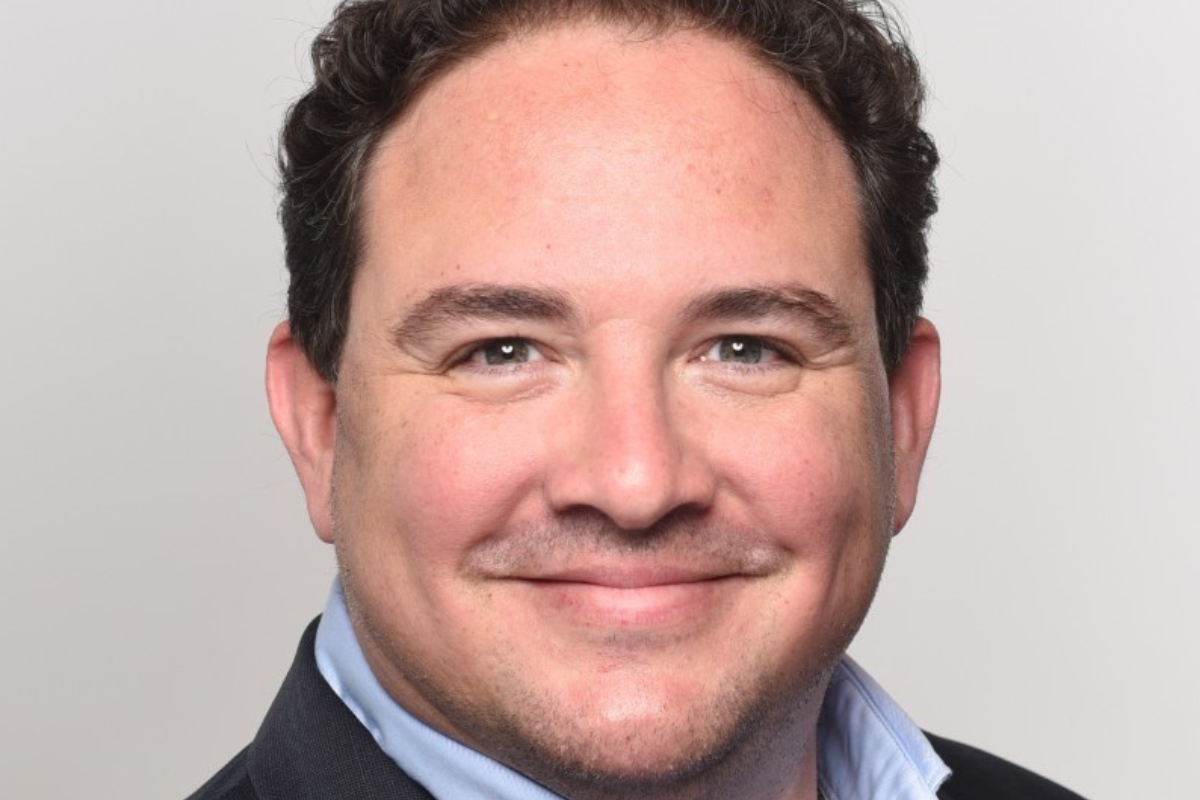
Some founding stories start with a business plan. AAZZUR‘s started with a game of Dungeons & Dragons. Philipp Buschmann and Richard Unger met at age 11 at the Vienna International School, bonded over code, and were coding for pay by 16 — a friendship that would eventually outlast several careers, three continents, and one failed challenger bank.
That failed attempt, in 2014, is where Martin Damaske entered the picture. Rather than walk away, the trio rented a villa in Vienna, moved in together for three months, and built the foundations of what would become AAZZUR: a platform designed to sit between banks and insurers, re-bundling financial products around how people actually live. A Techstars acceptance later, they were in Berlin — and building in earnest.
More than a decade on, that early conviction has hardened into traction: a £2m Seed+ round closed oversubscribed 3x, clients including TUI, Société Générale and Edenred, and a 2024 Fintech of the Year title from Mastercard, whose global network AAZZUR now taps through a Commercial Express agreement. We sat down with Philipp to talk about what it takes to build the front end for embedded finance — and why he believes every brand is about to become one.
1. Tell us about yourself / your co-founder(s).
The three of us — myself, Richard Unger, and Martin Damaske — go back further than most co-founding teams.
Richard and I actually met when we were 11 at Vienna International School, bonding over Dungeons & Dragons and a shared obsession with computers. By 16, we were already coding for pay. After school, Richard went deep into enterprise software development while I built a career at the intersection of fintech and entrepreneurship — starting at Razorfish building trading tech for State Street Bank, then as a strategy consultant designing Sparkasse’s online banking portal, and eventually helping lenders and challenger banks launch.
Martin came into the picture in 2014 when the three of us were part of a group trying to build a challenger bank together. That project didn’t make it, but our partnership did. We rented a villa in Vienna, moved in for three months, and used that time to plan, debate, and build the foundations of what became AAZZUR — a platform that sits between banks and insurance providers to re-bundle financial products around how people actually live and spend. We applied to Techstars, got in, and moved to Berlin.
What ties us together isn’t just a shared vision — it’s 30+ years of friendship, complementary skills, and a track record of building in fintech before it was called fintech.
2. Who are your target customers, and what problem do you address for them?
Our customers are brands, platforms, and ventures that want to offer financial services — but lack the expertise, resources, or time to build them.
The problem: embedding finance is now essential to staying competitive, yet the options are either too expensive (bespoke agency builds at £3–10m+, 18 months) or too rigid (cheap white-label products that can’t flex to your brand). Neither works.
AAZZUR sits in the sweet spot. Our modular Smart Finance Blocks, backed by middleware connecting 30+ pre-integrated banks and fintechs, let brands go live in 4–6 months with a small team at a fraction of traditional cost. Clients want the benefit of the technology, not the burden of the tech stack — and that’s exactly what we deliver. Clients like TUI, Société Générale, and Edenred are already doing it.
3. What is your product / solution, who do you compete with, and what is your USP?
AAZZUR is the modular front-end for embedded finance — a three-layer platform combining a growing library of Smart Finance Blocks (pre-built UI components), cloud-based middleware that orchestrates 30+ pre-integrated banks, fintechs and insurers, and a curated open ecosystem. Brands get plug-and-play access to cards, accounts, lending, wealth, insurance and more — all white-labeled to their brand in 4–6 months.
We compete on two fronts: expensive bespoke agency builds (EY, Accenture, Backbase) and cheap but inflexible white-label products (Moss, Toqio). There are also API-based orchestrators like Finastra and Weavr in the mix.
Our USP is the optimal point between the two. We’re the only player combining a fully embeddable front-end and a pre-integrated ecosystem under one roof — modular enough to customize, standardized enough to deploy fast and affordably. That means a team of two can launch what would otherwise take a team of 15, at 10x lower cost. We started early, which has given us an unmatched partner network and integrations that competitors can’t easily replicate. Named Fintech of the Year 2024 by Mastercard — who we’ve now signed a Commercial Express agreement with for global reach.
4. What is your current stage and traction, and how can our network help you in the next 6-12 months?
Stage & Traction
We’ve reached product-market fit and are now in a high-growth phase. £1m ARR growing at 3x year-on-year, a £2m Seed+ round just closed — oversubscribed 3x — and total investment of £6m. We have 50+ partners, clients including TUI, Société Générale/Treezor, Edenred and Adecco, and were named Fintech of the Year 2024 by Mastercard, with whom we’ve just signed a Commercial Express agreement for global reach.
We’re not searching for product fit — we’re scaling what’s working.
How your readership can help
Honestly, the most valuable thing a publication like yours can do is help us reach the decision-makers who don’t yet know embedded finance is an option for them.
There are thousands of brands — in travel, loyalty, HR, retail, corporate services — sitting on valuable customer relationships and leaving significant revenue on the table because they assume building financial products is too complex, too expensive, or not their problem to solve. It isn’t, and it doesn’t have to be. That’s exactly the conversation we want to be having.
Your readers are either building those businesses, advising them, or investing in them. A feature that opens their eyes to what’s now possible in embedded finance — and what a company like AAZZUR makes accessible — is the kind of visibility that generates the right inbound conversations for us. Not just awareness, but qualified interest from people who recognize themselves in the problem we solve.
5. How do you go to market? How are banks or insurers working with you (or can work with you)?
Go-to-Market
Our GTM is partner-led and deliberately low-cost. Around 70% of leads are referral-based, keeping customer acquisition under £10,000. We generate ~100 qualified leads per year, growing 50% year-on-year, through three parallel channels: inbound (SEO, content), outbound (LinkedIn, events, direct sales), and our partner ecosystem of referral, implementation, infrastructure and value-added partners. Mastercard’s Commercial Express agreement is a significant new distribution lever, opening up their global network to us directly.
We serve three customer types: startups needing to launch fast, enterprises wanting to deepen engagement, and platforms looking to monetise their user base through financial services.
How Banks and Insurers Work With Us
Banks and insurers aren’t our competition — they’re our distribution partners. By integrating once into the AAZZUR ecosystem, they instantly get exposure to every brand and platform we serve, without costly one-to-one distribution deals. Partners like Solaris, Swan, Treezor, Railsr and bsurance are already live in our network.
The model is simple: they bring the regulated product, we bring the brand relationships, the front-end, and the orchestration layer that makes it work. For any bank or insurer looking for a scalable new distribution channel into the embedded finance market, AAZZUR is the most efficient route to market available.
6. Any relevant industry trends or market shifts we should be watching?
Every brand will become a fintech
The Uber, Starbucks and Hilton playbook is going mainstream. Starbucks Rewards members spend 3x more than non-members and drive 57% of US sales. Hilton Honors members spend 25% more per stay. These aren’t fintech companies — they’re brands that embedded financial products and transformed their customer relationships. Every major brand in travel, retail, loyalty and HR is now asking how they replicate this. That wave is just beginning.
The infrastructure is finally ready
The BaaS and API layer has matured enormously in the last five years. What once required a banking licence, a team of 50 and 18 months can now be assembled modularly in a fraction of the time. The bottleneck has shifted from infrastructure availability to front-end execution and orchestration — which is precisely where AAZZUR plays.
AI is reshaping financial interactions
Agentic AI payments — where AI acts on behalf of users to initiate, approve and optimise financial transactions — is moving from concept to reality fast. This is already on our roadmap and we believe it will fundamentally change how consumers interact with financial products embedded in everyday apps.
Consolidation is coming
The embedded finance space has dozens of point solutions — a card provider here, a lending API there. Brands are fatigued by managing multiple suppliers with misaligned incentives. The market is moving towards orchestration platforms that abstract that complexity. That consolidation benefits players like AAZZUR who already sit at that orchestration layer.
Regulation as a tailwind
Open banking regulation across Europe and the UK is forcing incumbents to open their infrastructure, creating more integration opportunities and levelling the playing field in ways that continue to favour agile, API-first platforms.