
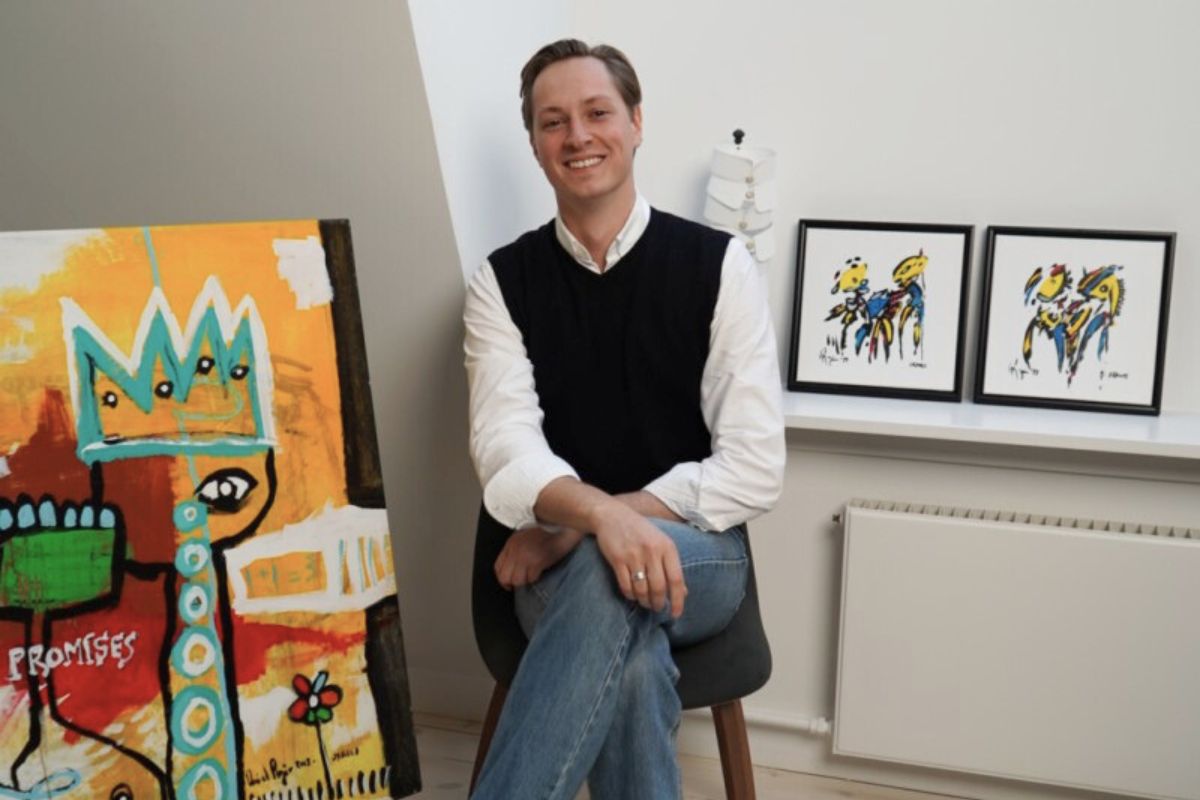
In the heart of Copenhagen, where curiosity first sparked a bold pan-European vision, Bastian Larsen founded BlackWood Ventures in 2021—not with a fund, but with a mission to back the most serious founders across Europe. Today, with a freshly closed $25M Fund I and a powerhouse network of over 1,000 angels backed by proven builders with real exits, BlackWood delivers far more than capital: it gives founders a true unfair advantage in FinTech, Cleantech, and Web3.
We’re delighted to sit down with Maxime Pasquier, Principal at BlackWood, who leads the investment team with a rare blend of operator, founder, and investor experience. From scouting deals to building companies and navigating uncertainty firsthand, Maxime’s “proximity to reality” lens delivers sharp, no-fluff insights into the infrastructure reshaping B2B FinTech and beyond. Ready to uncover what’s next? Let’s dive in.
1- Tell us a bit about yourself, both at work and leisure
I work at the intersection of technology, capital, and company building. Over the past six years, I’ve moved through the ecosystem in different roles, scouting, operating, founding, venture building, and today investing, but the thread connecting them has stayed remarkably consistent: proximity to reality.
I’m currently a Principal at BlackWood, where I lead the investment team and work closely with founders from pre-seed onward. The role is often described as pattern recognition, but in practice it’s closer to judgment under uncertainty 🙂
After having operated inside large organizations, built companies from zero, and sat on both sides of the fundraising table, I tend to look less for polished narratives and more for how people reason when things don’t go according to plan.
Outside of work, I read geopolitics, philosophy, and literature, listen to jazz, spend time in the mountains, and write. Writing, in particular, is how I slow things down and make sense of complex systems.
2- What sectors, theses or trends do you focus on, overall or within FinTech & InsurTech?
Historically, my focus has been B2B FinTech and InsurTech infrastructure, particularly in regulated or operationally heavy environments where software has to earn trust over time.
More recently, I’ve been spending increasing time on stablecoin-based payment rails and agentic, AI-driven financial workflows, not as speculative trends, but as emerging infrastructure layers. Stablecoins, in my view, are most interesting when they behave like boring plumbing: faster, cheaper, and more programmable settlement rails, especially for cross-border and B2B use cases where legacy systems remain slow and opaque.
In parallel, I’m interested in agentic systems where AI doesn’t just suggest actions, but can execute financial decisions within clearly defined constraints. This is particularly relevant in areas like treasury, payments, reconciliation, or insurance operations, domains where the challenge isn’t access to data, but the cognitive and operational load of acting on it correctly, repeatedly, and under regulation.
3- Any recent investments or partnerships you can share, and why you did the deal?
Recently, we invested in the Series A of Sidekick, a company we’ve followed closely over time. Beyond the investment itself, our focus is on actively supporting our champions as they scale, particularly through the transition from early traction to repeatable, sustainable growth.
Alongside this, we’ve also signed two new investments, one in FinTech and one in Web3. While they operate in different domains, the conviction drivers were similar: strong founders with clear problem ownership, products built with an honest understanding of market constraints, and a long-term view on value creation.
4- Top 3 lessons for B2B FinTech founders scaling revenue or raising funding today
1. Start with pilot partners and aim higher than feels comfortable
Early pilot customers matter enormously. Securing a credible, well-known partner early makes everything easier later: closing future deals, shortening sales cycles, fundraising, and hiring.
2. Build a sales team that knows exactly what it’s selling
In B2B FinTech, selling is not about persuasion, it’s about precision. Sales teams need deep product understanding and clarity on the buyer’s real pain points. Generic playbooks break quickly in regulated environments.
3. Assume sales will take longer, and focus where expansion is real
Be pessimistic on timing, as deals slip, committees get involved, budgets freeze. Model for that reality, then focus your energy on customers with genuine long-term upsell and expansion potential instead of chasing every opportunity.
5- What’s on your bookshelf / reading list / podcast app? Your favourite place for a coffee or a drink?
On my bookshelf right now is Trois Mexique by J. M. G. Le Clézio, literature that sits between travel, identity, and observation, and subtly changes how you look at places and systems.
For podcasts, I regularly listen to The Rachman Review and Uncapped with Jack Altman, both thoughtful in very different ways about power, technology, and decision-making.
In Copenhagen, my go-to place for a coffee is Café No. 11 and for a drink is Café Victor.
As we close this candid conversation with Maxime Pasquier, one thing is crystal clear: the future of finance won’t be built on hype, but on resilient infrastructure, precise execution, and founders who thrive when plans unravel. At BlackWood, that philosophy isn’t just talk—it’s how they spot and scale the next layer of FinTech and AI-driven workflows.
Thanks for joining us in the trenches with Maxime. If you’re a founder scaling B2B FinTech or an investor hunting real infrastructure plays, this is your blueprint. Stay tuned for the next Q&A—because the smartest moves in European tech are always one insightful conversation away. What trend are you betting on next?