
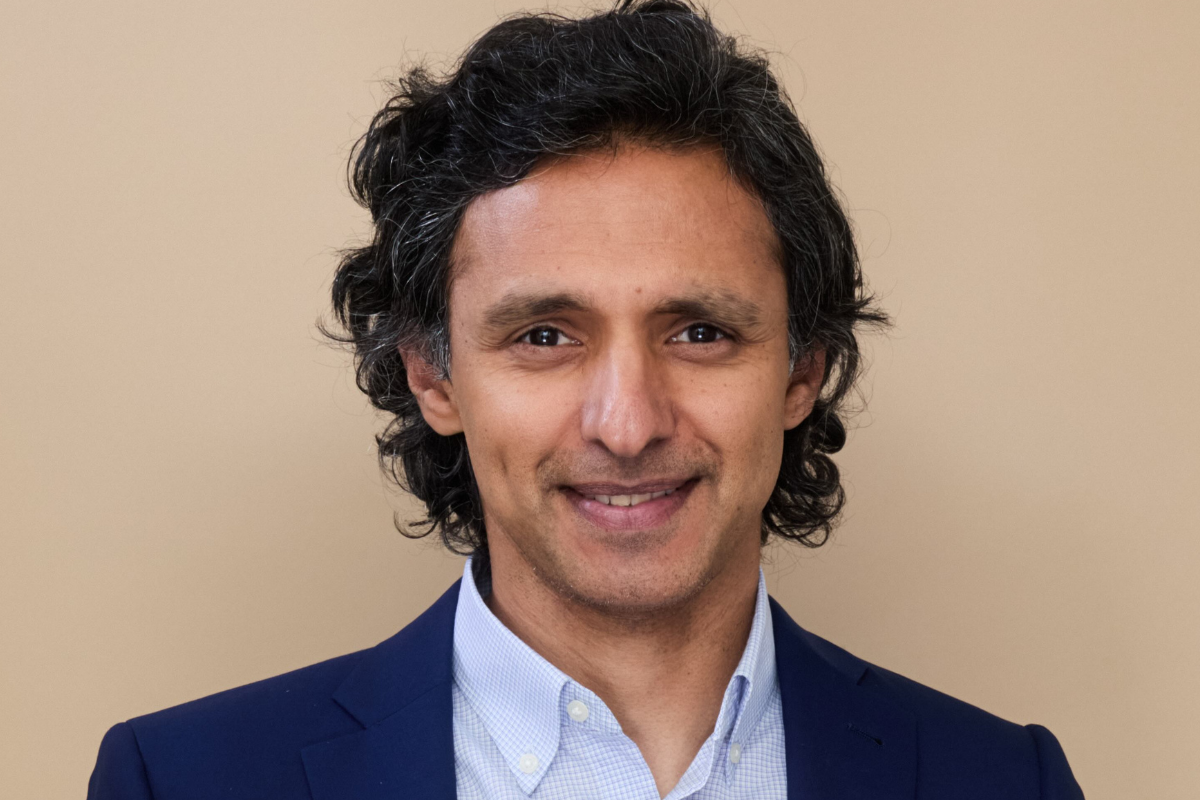
Managing general agents are quietly becoming one of the fastest-growing corners of US insurance — yet getting the capacity to back a program can still take the better part of a year. Denny Kuruvilla has watched that friction from every seat at the table: three ventures built, fifteen years spent inside insurance technology at TD Insurance and Hub International, and a stack of patents in AI and big data along the way. His latest venture, Konduit — backed by Aviva and incubated by Founders Factory — sets out to compress that months-long capacity hunt into a matter of days, structuring an MGA’s program and surfacing the gaps before any capacity provider sees them, all in twenty minutes flat. Four months after going live with zero marketing spend, Konduit already counts a dozen MGAs across three continents and a closed institutional cheque behind its seed round. We sat down with Denny to hear how he’s building the rails for a market that badly needs them.
1. Tell us about yourself.
I’m a three-time founder with fifteen years building insurance technology products and platforms with extensive experience in the US and Canada markets — TD Insurance, Hub International among them. Two prior insurance startups as Co-Founder, and several patents in AI and big data.
2. Who are your target customers, and what problem do you solve?
Managing general agents (MGAs) — specialist underwriting businesses who design insurance products in all the speciality lines. They’re the fastest-growing part of US insurance, and getting backing (capacity or paper) takes eight to twelve months. Most MGA CEOs spend the bulk of their time chasing it instead of running their business.
On the other side, capacity providers want to back good programmes but spend months on each one just working out what they’re looking at.
3. What is your product, and what’s your USP?
We get an MGA from plan to capacity conversations in days rather than months. An MGA has a variety of documents and data to support their program, but in speciality insurance, that’s almost always their own data formats and know how. And once you look at the big picture of how many MGAs and programs there can be, its a mess with no way to validate or even compare one to another.
Konduit structures it, guides them on what a capacity provider will actually want to see, the metrics that will get capacity comfortable and shows the gaps before anyone else does, and produces the strongest possible version of that MGAs programme. Twenty minutes to be market-ready. Capacity engages almost immediately on our platform.
There are good platforms solving adjacent problems but they mostly come with clauses that require certain depth in operations or possibly even underwriting standardization (that may not always work for innovation in speciality insurance). They connect capital markets to insurance risk, handling reporting after a deal closes, offering MGAs paper on fixed terms, reinsurance ops software.
A gap still remains where the first ask for capacity – especially if you are not yet at the size and scale that larger brokers and paper want to see – is just too long and painful. That’s the gap we successfully solve. We are AI native with targeted instances of AI massively reducing the complexity of navigating the placement cycle.
4. How do you help scale financial services, and how can institutions partner with you?
Brokers, capacity providers and alternative capital join the platform and get access to some of the most innovative MGA programmes being built right now — clean, structured, and genuinely easy to make a decision on. Capacity has their own workbench backed by AI and detailed data access to the MGA’s programme.
Instead of chasing an MGA for the number that wasn’t in the pack, they can assess a programme properly in one sitting, and see a portfolio of opportunities at once rather than one at a time. That means faster decisions on both sides, and appetite that would otherwise sit idle finding programmes that fit it.
5. What trends should we be watching?
Risk is moving into specialty faster than traditional insurers can build products for it — categories like cyber, AI liability and climate-linked cover barely existed a decade ago. At the same time the capital backing those products is getting more selective about who it backs. More new products, tighter capital, and a widening gap between the two. Worth reading: Conning’s MGA Market Study, AM Best’s DUAE report, and Vertafore’s 2026 MGA Outlook.
6. What’s your current stage and traction, and how can the network help?
Four months live with no marketing spend — everything inbound. Twelve MGAs across three continents, capacity providers onboarded on the other side, and programmes in active placement. Several of those MGAs had spent over a year looking for capacity before joining.
We’re raising a seed round and our first institutional cheque already closed. We are looking for conversations with MGAs, capacity providers and investors who know this market.
7. What’s on your bookshelf or podcast app? Favourite place for a coffee or a drink?
‘The Climb’ by Chris Froome.
I am a keen cyclist and runner and alternate between the two as seasons change. So any boutique coffee shops that are on a cycling route (there are plenty). Cappuccino mostly.
If there’s one thing this conversation makes clear, it’s that speed alone won’t fix a market built on opacity — structure will. As specialty risk multiplies faster than capital can evaluate it, platforms like Konduit are betting that the winners will be the ones who make a program legible, not just visible.
For MGAs tired of chasing capacity for a year at a time, and for providers hunting for cleaner deal flow, this is a space worth watching closely — and Denny is one of the founders worth watching it with.