
In the quiet transformation of streaming, music has become something far more powerful than entertainment: a predictable, global cash-flow engine generating roughly $45 billion in annual royalties. Yet for years, this asset class remained fragmented, illiquid, and largely inaccessible to institutional capital.
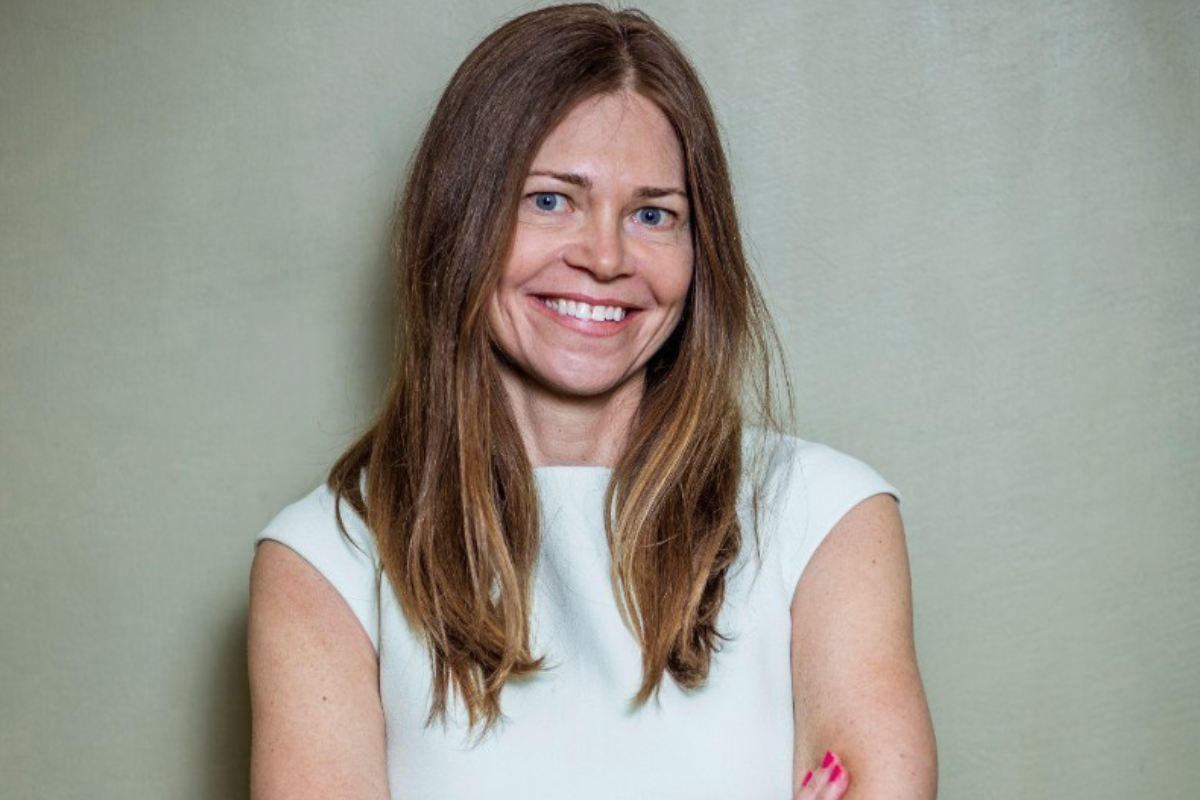
Enter Linda Portnoff, Founder & CEO of Tangy Market. With a PhD in Finance, a former role as CEO of Music Sweden, seven years on the board of STIM, and a background advising the Swedish government on the creative economy, Portnoff has spent her career at the precise intersection of intellectual property, music, and capital markets. What she saw on the STIM board was both the opportunity and the gap: streaming had turned songs into reliable revenue streams, but the financial infrastructure to value, finance, and invest in them simply did not exist.
Today, Tangy Market is building that missing layer—proprietary AI-driven valuation, transaction infrastructure, rights administration, and marketplace technology—aimed squarely at institutional investors, family offices, and financial institutions seeking differentiated, income-generating alternatives. Music is only the starting point; gaming and other cultural IP categories are next.
In this Q&A, Portnoff shares how Tangy Market is turning cultural intellectual property into a legitimate institutional asset class—and why the next chapter of finance may sound a lot like your favorite playlist.
1. Tell us about yourself / your co-founder(s).
I’m Linda Portnoff, Founder & CEO of Tangy Market. I hold a PhD in Finance and have spent my career at the intersection of intellectual property, music and capital markets. Before founding Tangy Market, I was CEO of Music Sweden, served seven years on the board of STIM (the Swedish collecting society), and advised the Swedish government on the creative economy.
While serving on STIM’s board, I saw streaming transform music into a predictable global cash flow—but there was still no financial infrastructure for valuing, financing or investing in these assets.
To solve that, we’ve built a team spanning capital markets, regulation, AI and rights management, including former executives from Skandia, Nordic Growth Market, Embracer, Starbreeze and Electronic Arts.
2. Who are your target customers, and what problem / opportunity do you address for them?
Our primary customers are institutional investors, family offices and financial institutions looking for differentiated, income-generating investments.
Music rights generate around $45 billion in annual royalties, yet the market remains fragmented, illiquid and operationally difficult to access. We provide the infrastructure that makes these assets investable—from sourcing and valuation to administration and reporting.
On the supply side, creators and rights holders gain access to capital without necessarily having to give up ownership of their intellectual property.
3. What is your product / solution? Who do you compete with, and what is your USP?
Tangy Market provides the financial infrastructure for investing in cultural intellectual property.
Our platform combines proprietary AI-driven valuation, transaction infrastructure, rights administration and marketplace technology into one solution. We describe it as building the infrastructure for cultural IP in the same way exchanges built infrastructure for equities.
Companies such as Royalty Exchange, ANote Music and SongVest have demonstrated demand for music-rights investing. Our difference is that we’re building the complete infrastructure layer rather than simply a marketplace. Music is our starting point, with gaming and other IP categories to follow.
4. How do you help scale financial services, and how can financial institutions partner with you?
We’re helping financial institutions offer an entirely new investment category without having to build specialized infrastructure themselves.
Tangy Market handles sourcing, valuation, administration, reporting and marketplace operations, while banks, brokers and wealth managers can focus on client relationships and distribution.
For example, a financial institution could offer professionally managed music royalty portfolios as part of its alternative investment offering, while relying on Tangy to operate the underlying infrastructure.
5. What relevant industry trends or market shifts should we be watching?
Three trends stand out.
First, cultural IP is becoming an established institutional asset class as streaming has created recurring, global royalty cash flows.
Second, advances in AI and machine learning are making it possible to value intellectual property with increasing precision, enabling more transparent investment decisions.
Third, investors continue searching for alternative assets that offer diversification beyond traditional equities and fixed income.
I’m also following how generative AI will reshape the economics of music, from royalty allocation to licensing models and ultimately the valuation of creative assets.
For readers interested in the topic, I’d recommend my paper “What’s the Value of Music, and Who Should Decide its Worth?”, available on SSRN.
6. What is your current stage and traction, and how can our network help?
Tangy Market is a seed-stage company currently raising a $2 million round, with more than $1 million already raised.
Our retail marketplace has been live since 2021 and today serves 6,000+ users across 50+ countries, with more than 300 investable assets representing over 20 billion streams. The platform has also provided valuable real-world data for refining our AI valuation models and marketplace infrastructure.
As we enter our next phase, we’re looking to partner with family offices, institutional investors, banks, brokers and wealth managers interested in expanding their alternative investment offering. We’re also interested in strategic partnerships that can help distribute cultural IP investments to a broader investor base.
7. What’s on your bookshelf or podcast app? Your favorite place for a coffee or a drink?
A couple of weeks ago, I walked into Bart’s Books, an outdoor bookstore in Ojai, California, and ended up buying The Age of Surveillance Capitalism by Shoshana Zuboff. What caught my eye wasn’t just the book—it was the shelf itself, organized from socialism on one end to libertarianism on the other. I liked the idea that understanding complex systems means being willing to explore different perspectives rather than staying in one camp.
Although the book was published in 2019, many of the questions it raises feel even more relevant today: Who creates value from data? Who owns it? And how should technology reshape markets? The conversation has evolved with the rise of generative AI, but the underlying questions about ownership, incentives and power remain. I find myself drawn to books that challenge conventional thinking and explore how markets work—and how they might work better.
As for coffee, my favorite place is Leonardos Kafferosteri in Södermalm, Stockholm. Over the past six months, my colleague Tommy Fransson and I have spent countless hours there sketching out what we call Tangy 2.0—our next chapter as we evolve from a marketplace into the financial infrastructure for cultural IP. Some of our best ideas have started over a cup of black coffee at Leonardo’s.
As cultural IP continues its quiet rise into the institutional mainstream, the questions Linda Portnoff raises feel increasingly urgent: Who captures the value created by creativity? How do we price the intangible with rigor? And what new infrastructure will be required as generative AI reshapes royalty flows and ownership models?
Tangy Market’s answer is ambitious and clear—build the complete financial plumbing rather than just another marketplace. With a live retail platform already serving thousands of users across more than 50 countries and a seed round underway to scale institutional distribution, the company sits at a compelling inflection point.
For investors hunting for uncorrelated income, for wealth managers looking to expand alternative offerings, and for anyone curious about the next frontier of alternative assets, this is a conversation worth following closely. The soundtrack of the future may well include a new asset class—and Tangy Market is writing the score.